The sites Where the bishops met
The Church of Mary, Ephesus's Cathedral of the Councils
Most visitors walk out of Ephesus without knowing they passed one of the most important churches in Christian history. It stands a short way off the main path, near the Lower Gate, and it is usually quiet.
The short answer
The Church of Mary is a ruined fifth-century cathedral inside Ephesus Ancient City, near the Lower Gate. The Council of Ephesus met here in AD 431 and confirmed the title Theotokos, Mother of God, for the Virgin Mary. Its apse, pillars and baptistery still stand, and the standard Ephesus ticket covers it. It is not the House of the Virgin Mary, which is a separate site on the hill above Ephesus.
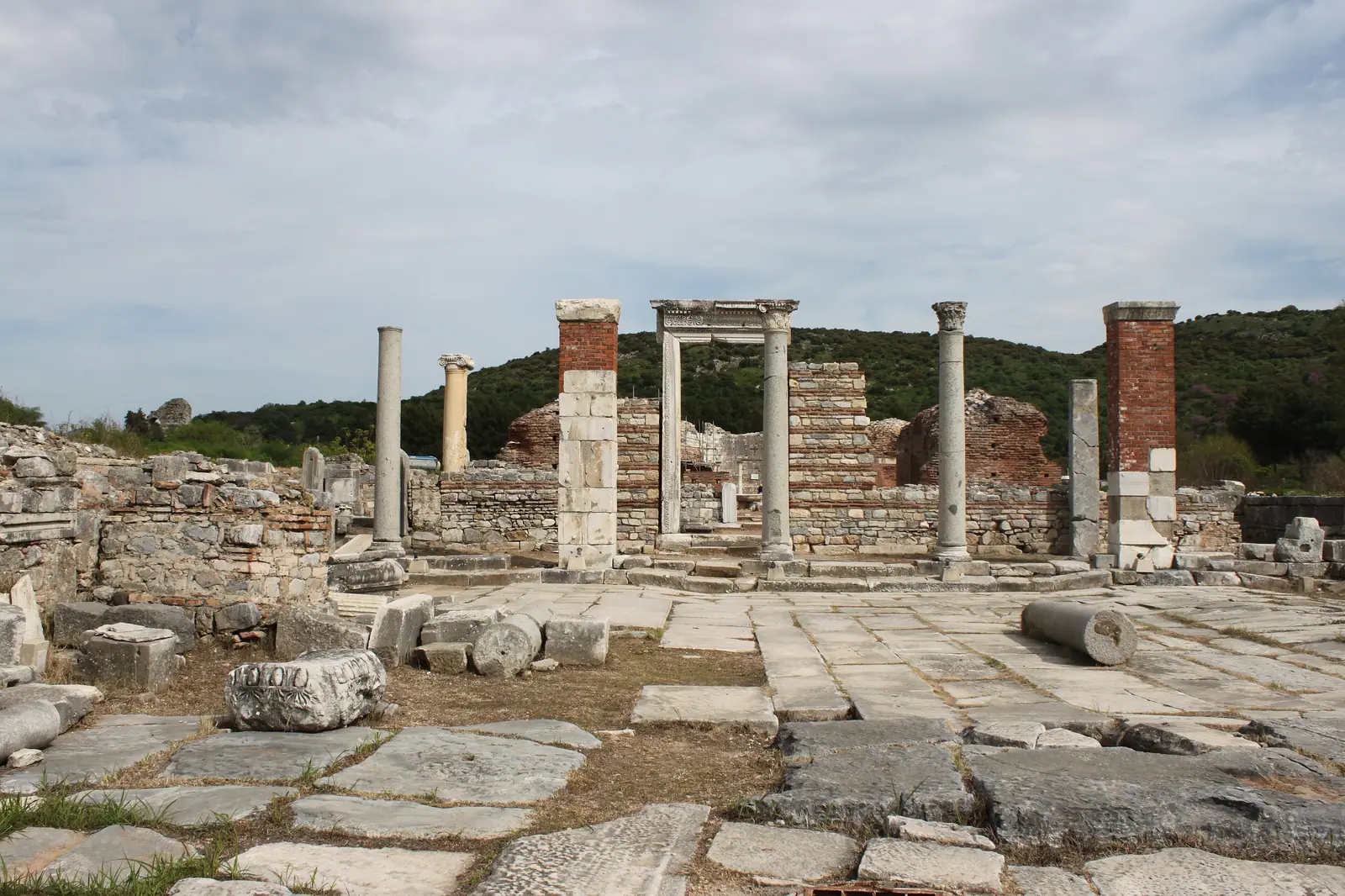
- What it is
- the ruined cathedral of Ephesus, also called the Church of the Councils
- Famous for
- the Council of Ephesus, June 22 to July 31, AD 431
- Built
- early fifth century, inside a Roman hall of the second century
- What stands today
- the apse, brick and marble pillars, and an eight-sided baptistery
- Where
- inside Ephesus, near the Lower Gate, north of Harbor Street
- Ticket
- covered by the standard Ephesus Ancient City ticket
What is the Church of Mary in Ephesus?
It is the ruined cathedral of ancient Ephesus, an early Christian church dedicated to the Virgin Mary as Theotokos, a Greek title that means Mother of God. It is also called the Church of the Councils, because the Council of Ephesus met inside it in AD 431. For centuries it was the seat of the bishop of Ephesus.
The church dates from the early fifth century. One long-held tradition calls it the earliest known church dedicated to the Virgin Mary, though recent research suggests it may have taken her name a little later, around the year 500. Either way, this is the building where one of the great debates of the early church was settled, and you can still walk through its nave.

What happened at the Council of Ephesus in 431?
Bishops from across the Christian world met here to settle how the church should speak about Mary and, through her, about Christ. The Roman emperor Theodosius II called the council, and it sat in the Church of Mary from June 22 to July 31, 431. It is counted as the third ecumenical council.
The argument was between two leading churchmen. Nestorius, the patriarch of Constantinople, preferred to call Mary Christotokos, Christ-bearer. Cyril of Alexandria defended the older title Theotokos, God-bearer. The council sided with Cyril: it condemned the teaching of Nestorius, confirmed the Nicene Creed and upheld the title Theotokos. Christians who say "Mother of God" today are using the words this council confirmed.
Archaeologists think the building may even have been made ready for the occasion. The latest evidence suggests the old Roman hall on this spot was converted into a church for the council itself, and became the bishop's church afterward.
Planning the day? Match a tour to your hours ashore
-
Time in port: Under 5 hours ashore
The Open-Air Circle
No tickets and almost no walking: Artemis, Selcuk and a drive past the ruins.
Tour length: 3-4 hours
-
Time in port: 5 to 8 hours
Just Ephesus
Ephesus from the Upper Gate down to the Lower Gate, and back with time to spare.
Tour length: 3-3.5 hours
-
Time in port: 8 to 9 hours
Marble, Mosaics and Artemis
All of Ephesus, the Terrace Houses and the Temple of Artemis.
Tour length: 5.5-6.5 hours
-
Time in port: 9 hours or more
The Road of Paul and John
Ephesus, the House of the Virgin Mary, St. John and Artemis.
Tour length: 6-7 hours
-
Time in port: Late arrival, tender or tight call
All-Aboard Ephesus
We plan backward from all-aboard and fit in only what fits.
Tour length: Fits your call
-
Time in port: You have your own list
Your Ship, Your Day
Tell us your ship and your wishes; we build the day around both.
Tour length: Fits your call
Every tour is private and priced from €33 per person for groups of 8 or more; smaller groups get a private quote. Any group size: 1 to 52 people per coach, and more coaches for larger groups. Entrance tickets are extra, at the official price.
What can you see at the Church of Mary today?
A long, roofless church with enough standing to read its shape. At one end rises the curved wall of the apse, with columns in front of it. Along the nave stand heavy pillars of brick and marble from a later rebuilding, and a marble doorway still frames the way through.
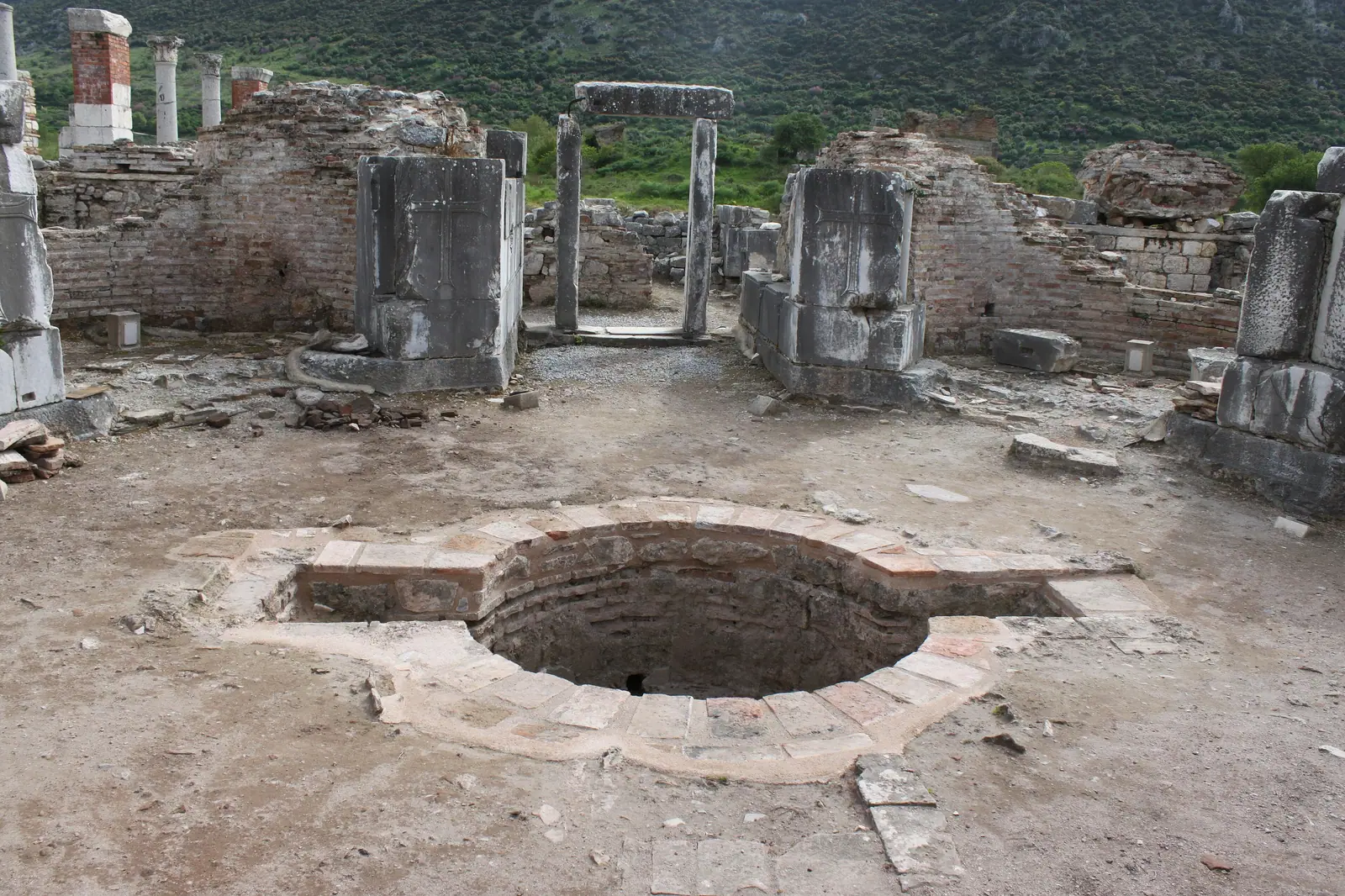
The corner most visitors remember is the baptistery, an eight-sided room that was once lined with marble; parts of that lining survive. In the middle of its floor is the round font, sunk into the ground. Baptism here meant stepping down into the water.
The church is unusually long and narrow, and there is a reason. It was built inside the south hall of a huge second-century temple precinct, raised in the time of the emperor Hadrian. That hall was about 263 meters long, far too big for a church, so the builders used only its western part.

Why does the church look like several churches in a row?
Because it was rebuilt more than once on the same strip of ground. The first church was a long basilica with columns. Later a narthex, an open courtyard and the baptistery were added at its western end. After that church was ruined, around the middle of the sixth century, the western part was rebuilt as a domed church. When that one failed too, the eastern part of the old basilica was put back into use, with brick pillars in place of its columns.
That is why some older books call it the Double Church. By the seventh century at the latest, the bishop's seat had moved to the Basilica of St. John on the hill in Selcuk, but the Church of Mary stayed in use as a burial church well into the Middle Ages. Austrian archaeologists uncovered the ruins in the 1920s and have studied them again since 1986.
Is the Church of Mary the same as the House of the Virgin Mary?
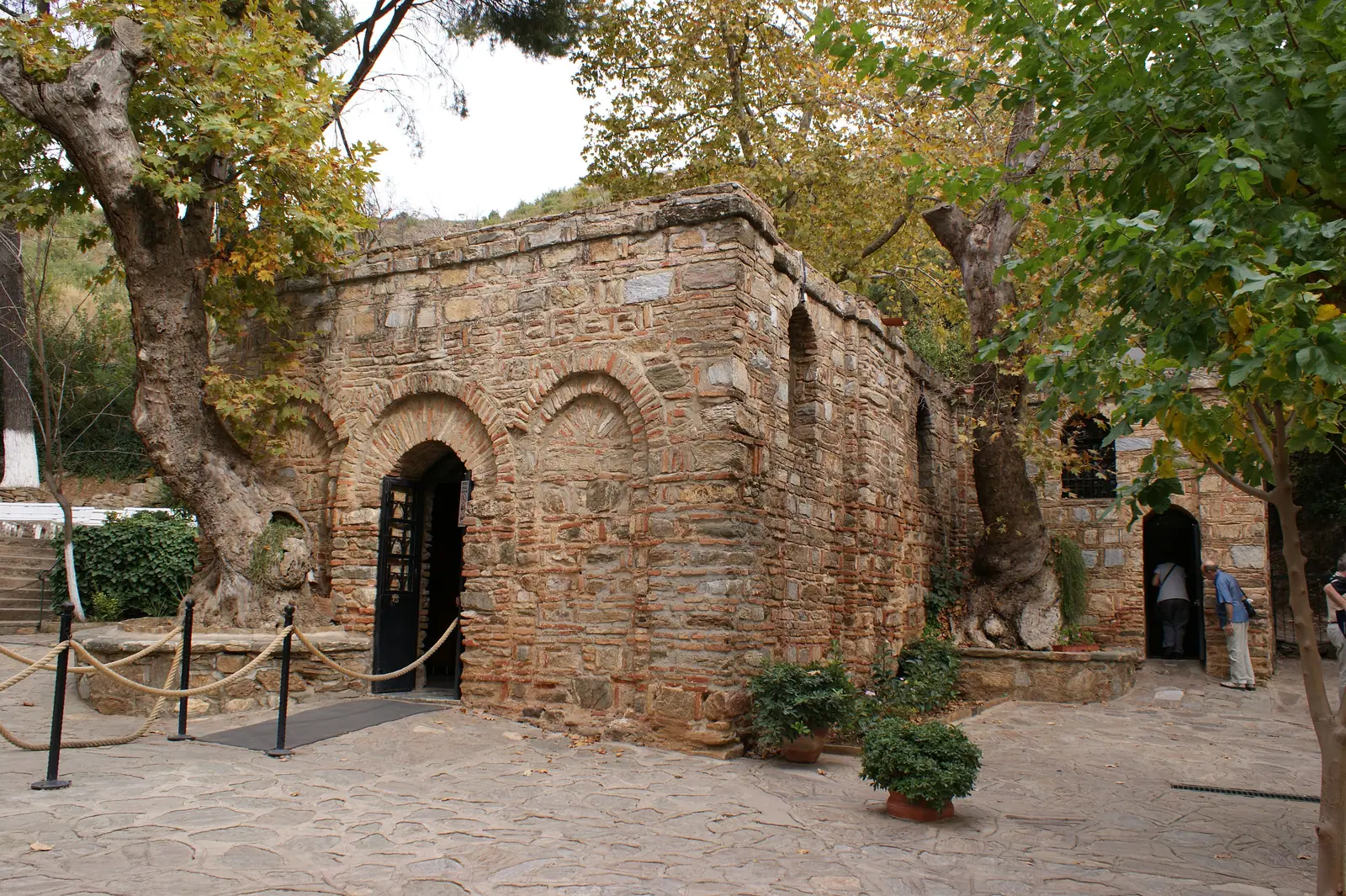
No, they are two different places, and many visitors mix them up. The Church of Mary is a ruined cathedral inside the ancient city, on flat ground near the old harbor. The House of the Virgin Mary is a small stone chapel in the wooded hills above Ephesus, where tradition holds that Mary spent her last years. It has its own entrance and its own fee, and you reach it by road, not on the walk through the ruins.
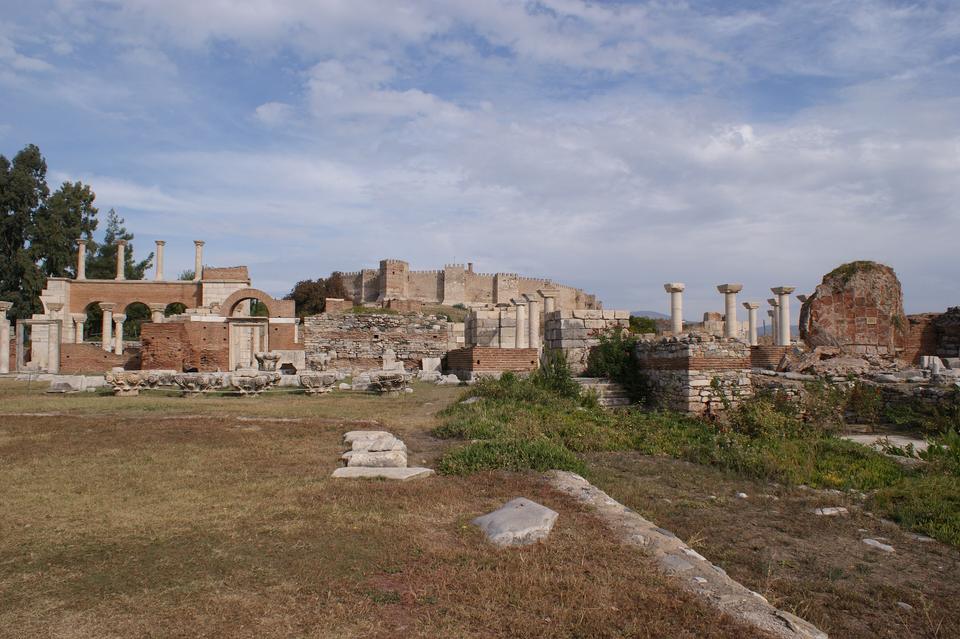
The two belong to the same story, though. Ephesus is the city of the apostle John, and the tradition that Mary came here with him is one reason a great church in her name stood in this city. If both matter to you, tell us when you write, and we will plan a day that includes the house, the church and the basilica where John is said to be buried.
Where is the Church of Mary, and can a tour include it?
It stands in the lower city, north of Harbor Street and close to the Lower Gate, where most guided walks end. Tours that enter at the Upper Gate, as ours do, walk down Curetes Street to the Library of Celsus and the Great Theater; the church is a short detour off the path between the theater and the exit. Because it is off the main route, large groups usually skip it, and you may have it almost to yourself.
It is not a fixed stop on our standard tours, so ask for it in advance. Our Biblical Ephesus tour is the natural fit, and a custom shore excursion can be built around it. We will tell you honestly whether your ship's hours leave room for it. The site has almost no shade here, so bring water and a hat.
We meet you right outside the cruise terminal exit at Kusadasi port; once you are out, it takes about a minute to meet your guide. Use our inquiry form to tell us your ship and date.
Questions cruise guests ask us
Is the Church of Mary included in the Ephesus ticket?
Yes. It stands inside Ephesus Ancient City, so the standard Ephesus ticket covers it with no extra charge. Entrance tickets are not part of our tour price: we buy skip-the-line tickets in advance and you pay the official price. Our fees page lists the current amounts.
Where was the Council of Ephesus held?
In the Church of Mary, the cathedral of Ephesus, from June 22 to July 31, AD 431. The ruins of that church still stand inside the ancient city, near the Lower Gate.
Is there a church in Ephesus today?
There are church ruins, not a working parish church. Inside the ancient city stands the ruined Church of Mary, and in nearby Selcuk the ruined Basilica of St. John. The small chapel at the House of the Virgin Mary, in the hills above Ephesus, is still a place of prayer.
Is this the church of Ephesus from the Book of Revelation?
Not the building. The church of Ephesus addressed in Revelation was the Christian community of the city in the first century, one of the seven churches. The Church of Mary was built in the early fifth century, about four hundred years after Paul lived and taught in Ephesus.
Did the Virgin Mary live in Ephesus?
Tradition holds that she spent her last years near Ephesus, at the site now called the House of the Virgin Mary. That is a tradition, not a proven fact, and our page on the house explains how the site was identified in 1891.
Add Info Ephesus as a preferred source on GoogleGoogle then highlights our articles for you in Top Stories and in its AI answers.
Read next

Tell us your ship. We will plan the day around it.
Send your ship name, date and all-aboard time, and we reply with a plan and an exact price within 24 hours.
Get My QuoteNo prepayment · Reply within 24 hours · TÜRSAB 15746
Prefer email? info@infoephesus.com
